

If you missed Part 1 you can find it here:

The Christian Response To….
Naturalism
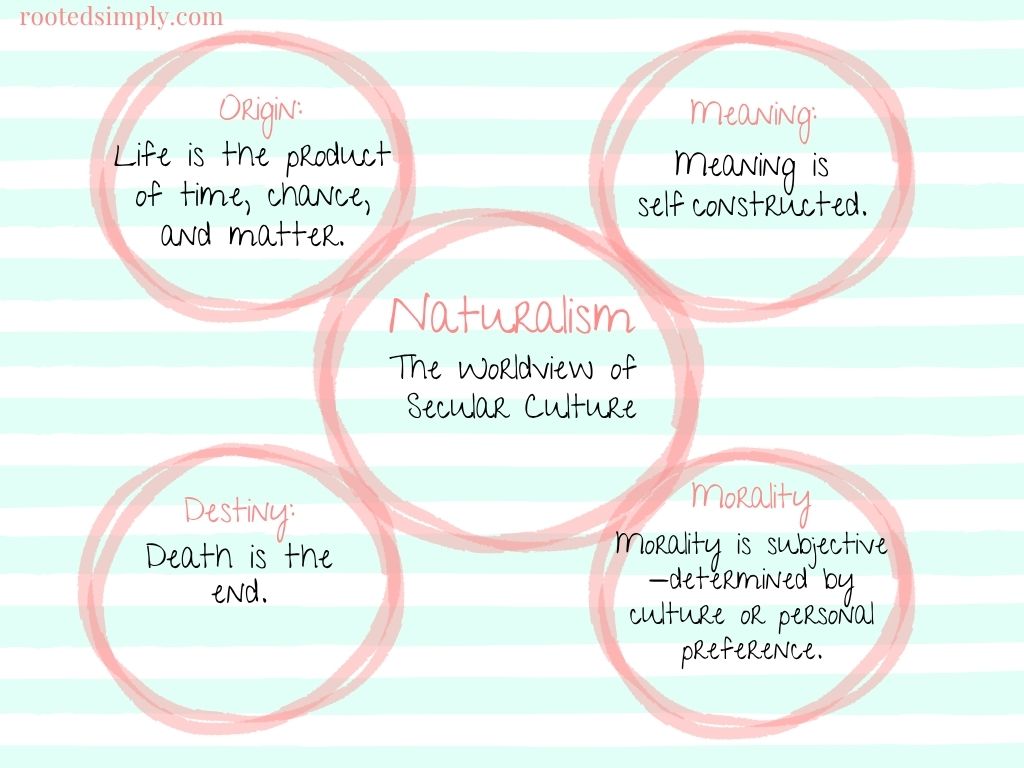
The Christian response to naturalism goes far deeper than simply disagreeing with its conclusions. It challenges the very foundations of naturalism while offering a richer, more coherent vision of reality, humanity, and hope.
Human Identity: More Than Biology
Naturalism reduces human beings to biological machines—collections of atoms shaped by time, chance, and natural processes. Christianity responds by affirming that humans are image bearers of God. This means people possess inherent dignity, moral worth, creativity, rationality, and relational capacity that cannot be explained by material processes alone. Consciousness, love, beauty, and moral awareness point beyond matter to a personal Creator.
Meaning and Purpose: Not Self-Invented
Naturalism claims meaning is self-constructed, but this collapses under its own weight. If humans are accidental products of impersonal forces, any meaning we create is temporary and ultimately insignificant. Christianity offers a God-given purpose: to know, love, and glorify God. This provides a stable, objective foundation for identity and meaning that does not evaporate with changing circumstances.
Morality: Objective, Not Illusory
Under naturalism, morality is either subjective or a product of evolutionary convenience. This makes it impossible to condemn evil in any objective sense. Christianity responds by grounding morality in the character of God. Right and wrong are not human inventions—they reflect the nature of a holy and just Creator. This explains why humans universally recognize moral truths and feel moral responsibility.
Existence Itself: A Personal Cause
Naturalism struggles to explain why anything exists at all. The universe cannot create itself, and impersonal forces cannot account for the fine tuning, order, and intelligibility of reality. Christianity offers a coherent explanation: a personal, eternal God who created the universe intentionally and sustains it with purpose.
Hope Beyond Death
Naturalism ends with nothingness—death is the final chapter. Christianity responds with eternal hope grounded in the resurrection of Jesus. This hope is not wishful thinking but a historical claim that provides confidence in life beyond the grave.
A Relational God
Perhaps the most profound difference is relational. Naturalism offers a cold, impersonal universe. Christianity offers a God who knows, loves, and pursues humanity. This transforms life from cosmic accident to divine intention.
Postmodernism
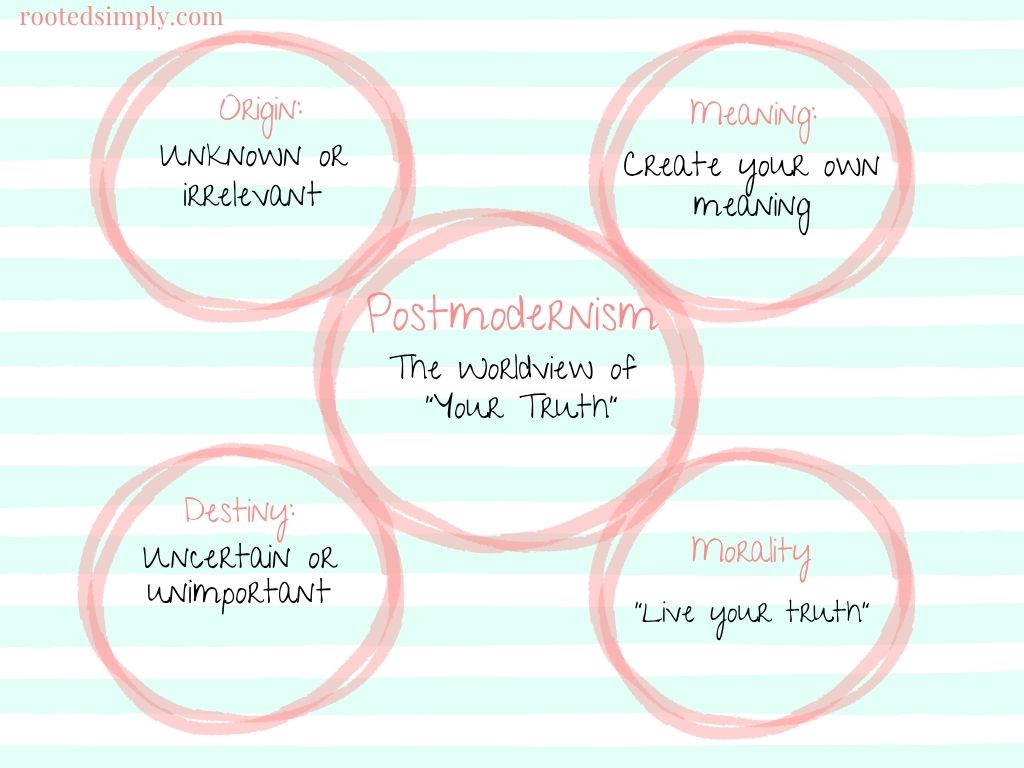
The Christian response to postmodernism engages its longings, challenges its contradictions, and offers a more stable, life-giving foundation than the shifting sands of “your truth.”
Truth: Not Relative, but Revealed
Postmodernism treats truth as personal, fluid, and subjective—each person creates their own reality. Christianity responds by affirming objective truth rooted in the character of God and revealed in Scripture. This doesn’t dismiss the postmodern concern about abusive authority; instead, it shows that truth and compassion are not enemies. Jesus embodies both grace and truth, offering certainty without arrogance and authority without oppression.
Knowledge: Not Impossible, but Personal
Postmodernism claims we cannot truly know ultimate reality. Christianity agrees that human knowledge is limited but insists that God has made Himself knowable. Truth is not discovered through self-construction but received through revelation. This answers the postmodern longing for authenticity by grounding it in a relationship with a personal God rather than subjective feelings.
Identity: Not Self-Invented, but God-Given
Postmodernism encourages people to define their own identity, yet this often leads to confusion, instability, and contradiction. Christianity offers a secure identity: humans are image-bearers of God, loved, known, and called. This provides a foundation for dignity that does not shift with cultural trends or personal emotions.
Morality: Not “Your Truth,” but God’s Character
Postmodern morality—“live your truth”—cannot consistently condemn evil because it denies any universal standard. Christianity grounds morality in the unchanging character of God. This allows Christians to affirm empathy and justice (values postmodernism rightly cherishes) while also providing a coherent basis for them.
Hope: Not Uncertain, but Anchored
Postmodernism treats destiny as unknowable or irrelevant. Christianity responds with a clear and hopeful future rooted in the resurrection of Jesus. Hope is not a vague feeling but a historical reality that shapes life today.
Relationship: Not Suspicion, but Invitation
Postmodernism is suspicious of authority—and often for good reason. Christianity offers a relational God, not an oppressive system. Jesus invites doubters, skeptics, and wounded seekers into honest conversation. His authority heals rather than harms.
New Age Spirituality
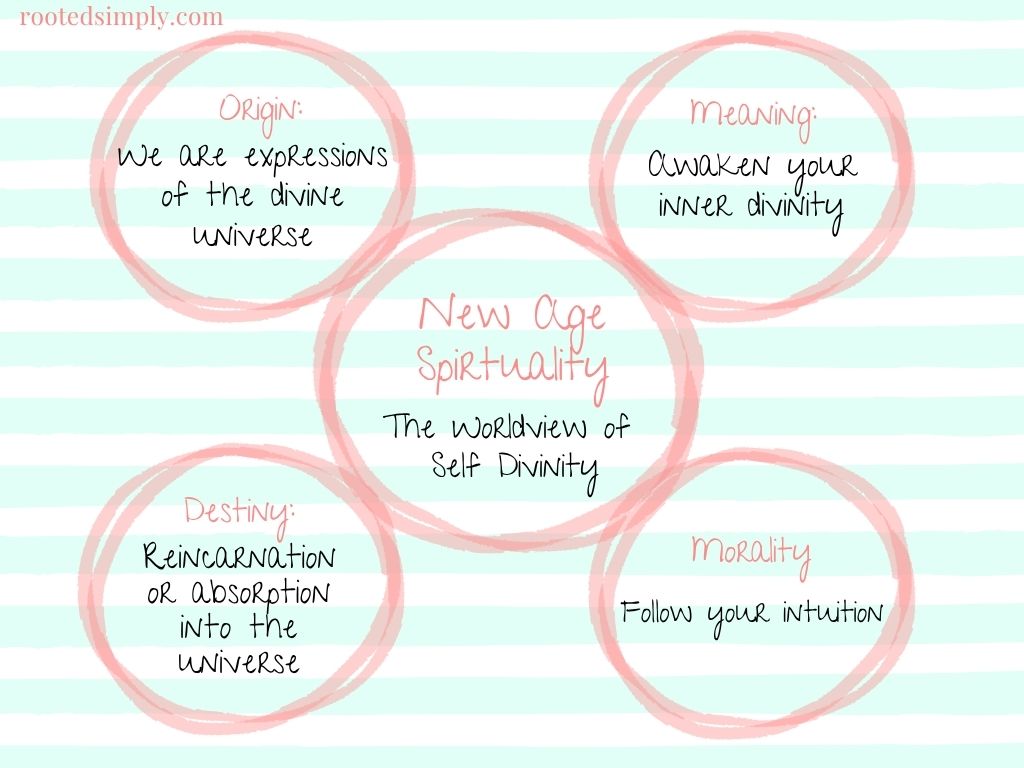
The Christian response to New Age spirituality engages its spiritual longings, exposes its contradictions, and offers a far more personal, coherent, and hope-filled vision of God and humanity than the idea of self-divinity.
God: Not an Energy, but a Personal Creator
New Age spirituality teaches that God is an impersonal force—an energy field that permeates the universe. Christianity responds by affirming that God is personal and relational. He speaks, loves, listens, and acts. A force cannot forgive, guide, or enter into relationship; only a personal God can. This answers the New Age desire for spiritual connection with a God who actually knows and cares for His people.
Humanity: Not Divine, but Image Bearers
New Age spirituality claims that individuals are divine, fragments of the universal energy. Christianity counters by teaching that humans are image-bearers of God—deeply valuable, spiritually significant, but not gods. This distinction matters: if humans are divine, evil becomes an illusion, suffering becomes meaningless, and moral responsibility dissolves. Christianity preserves human dignity without collapsing the Creator- creature distinction.
Meaning: Not Inner Divinity, but Knowing God
New Age meaning centers on awakening one’s inner divinity. Christianity offers a richer purpose: knowing, loving, and glorifying God. Instead of turning inward to discover godhood, Christianity invites people to turn outward to a God who reveals Himself, redeems, and restores. Meaning is not self-manufactured—it is received.
Morality: Not Intuition, but God’s Character
New Age morality is guided by intuition—“follow your inner light.” But intuition varies wildly and cannot ground justice, truth, or goodness. Christianity roots morality in the unchanging character of God. This provides a stable foundation for love, justice, and righteousness that does not shift with personal feelings.
Evil and Justice: Not Illusions, but Realities
New Age spirituality struggles to explain evil because it sees all reality as divine. Christianity acknowledges evil as real and offers a coherent explanation: human rebellion against God. It also provides a solution—Jesus’ sacrificial death and resurrection—something New Age spirituality cannot offer.
Destiny: Not Absorption, but Resurrection
New Age destiny is reincarnation or absorption into the universe. Christianity responds with eternal life grounded in the historical resurrection of Jesus. Instead of losing personal identity in cosmic energy, Christianity promises a restored creation, resurrected bodies, and everlasting relationship with God.
Salvation: Not Self-Realization, but Grace
New Age spirituality teaches that salvation comes through self realization—discovering your inner divinity. Christianity proclaims salvation by grace, not effort. Jesus is not a guru showing the path to enlightenment; He is a Savior who rescues sinners and reconciles them to God.
Islam
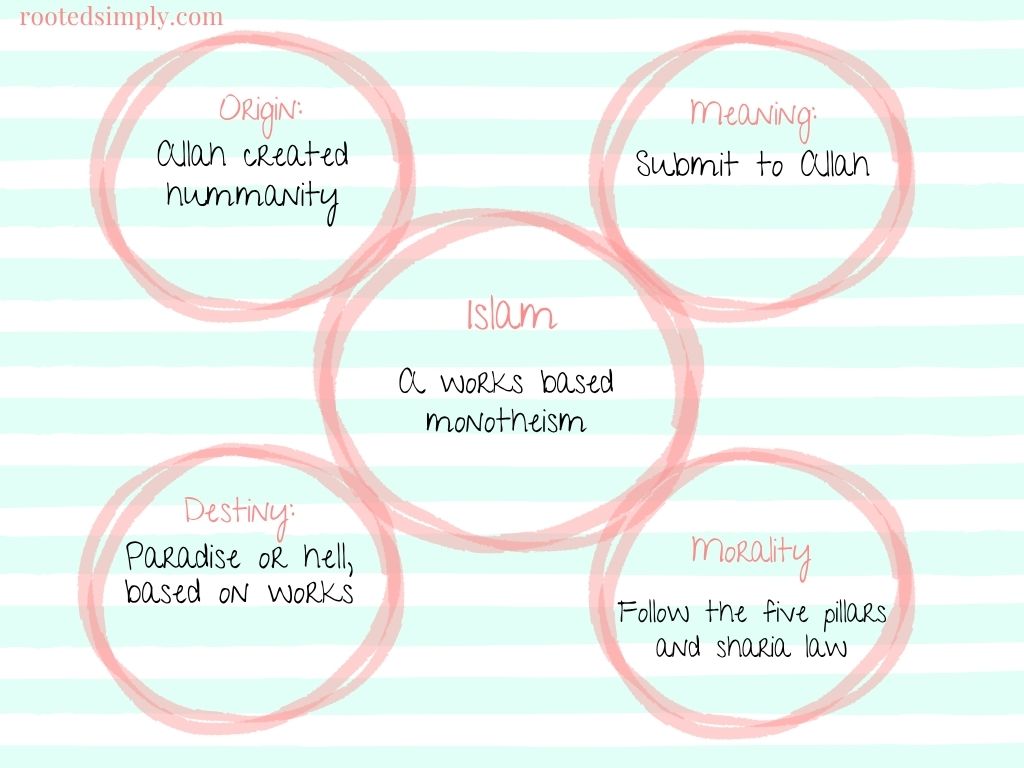
The Christian response to Islam affirms what Islam gets right, addresses where it diverges from biblical teaching, and offers a deeper, grace-centered vision of God and salvation that Islam’s works based system cannot provide.
God: Not Distant, but Relational
Islam proclaims one God—an essential truth Christianity wholeheartedly affirms. But Islam presents Allah as ultimately distant and unknowable. Christianity responds by revealing a relational God who invites people into personal fellowship. God is not merely sovereign; He is Father. He speaks, loves, pursues, and adopts His people into His family through Christ.
Jesus: Not Just a Prophet, but the Savior
Islam honors Jesus as a prophet but denies His deity, crucifixion, and resurrection. Christianity responds by affirming Jesus as God incarnate—the eternal Son who entered history to redeem humanity. The cross is not a tragic mistake; it is the center of God’s saving plan. The resurrection is not denied; it is the foundation of Christian hope.
Salvation: Not Earned by Works, but Given by Grace
Islam teaches a works-based path to paradise—obedience to the Five Pillars, moral effort, and hope that one’s good deeds outweigh the bad. Christianity offers a radically different message: salvation by grace through faith in Christ. Human effort cannot bridge the gap between God’s holiness and human sin. Only Jesus’ finished work provides assurance, forgiveness, and peace.
Morality: Not Law Alone, but Transformation
Islam emphasizes Sharia as the moral path. Christianity affirms moral obedience but grounds it in inner transformation through the Holy Spirit. Christians obey not to earn salvation but because they have already received it. Morality flows from a changed heart, not fear of judgment.
Destiny: Not Uncertain, but Assured
Islam teaches that destiny depends on works and Allah’s final decision. Christianity offers assurance of eternal life through Christ’s resurrection. Believers do not live in fear of judgment; they live in confidence that Jesus has secured their future.
Human Worth: Not Earned, but Given
Islam values community, discipline, and reverence for God—strengths Christians can appreciate. But Christianity goes further by grounding human dignity in being image bearers of God, loved personally and eternally. Worth is not achieved through obedience; it is bestowed by grace.
Justice and Mercy: Not in Tension, but Fulfilled in Christ
Islam struggles to reconcile Allah’s justice with His mercy. Christianity resolves this tension at the cross, where God’s justice is satisfied and His mercy is poured out. Jesus is the meeting place of divine holiness and divine love.
Atheism
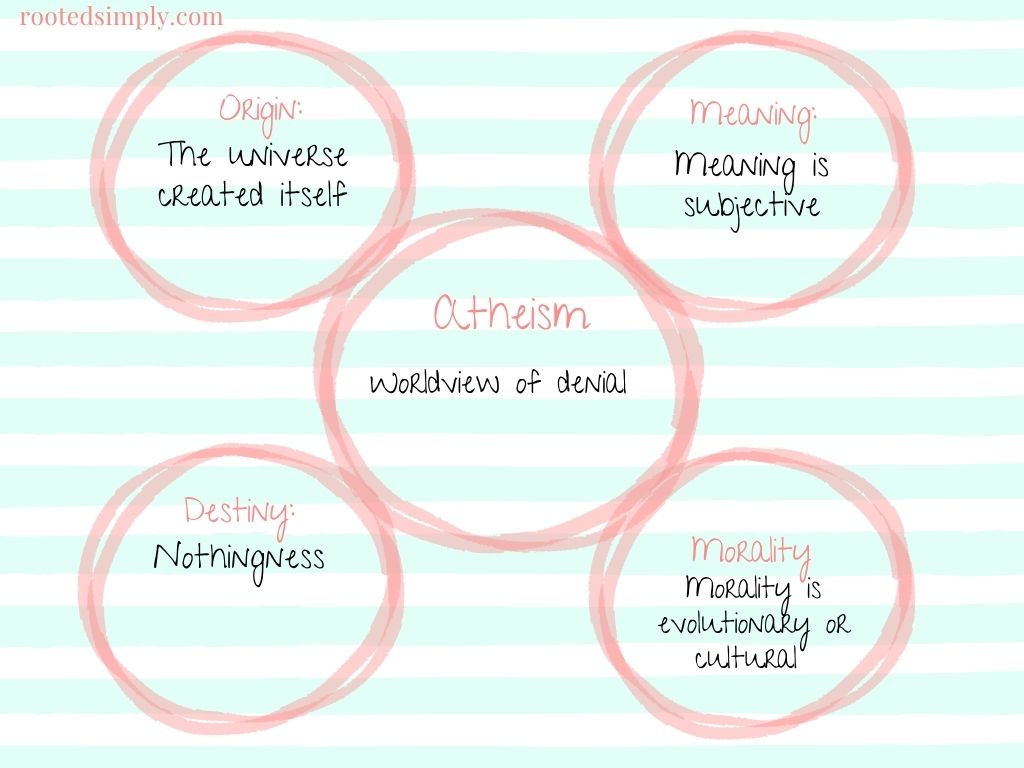
The Christian response to atheism engages its intellectual seriousness, addresses its deep limitations, and offers a fuller, more coherent account of reality, morality, meaning, and hope than a worldview that denies God altogether.
Reality: Not Self-Created, but God-Created
Atheism claims the universe created itself or emerged from impersonal forces. Christianity responds by affirming a personal Creator who intentionally brought the universe into existence. The existence of order, fine-tuning, consciousness, and rationality points beyond matter to mind. A universe that “creates itself” is logically impossible; Christianity offers a cause sufficient to explain the effect.
Humanity: Not Accidents, but Image Bearers
Atheism reduces humans to biological organisms—highly evolved animals with no inherent purpose. Christianity counters by teaching that humans are image bearers of God, endowed with dignity, rationality, creativity, moral awareness, and relational capacity. These uniquely human qualities resist reduction to chemistry and physics. Christianity explains why humans long for meaning, justice, beauty, and love.
Meaning: Not Subjective, but God-Given
Atheism insists meaning is self-constructed, but subjective meaning collapses under suffering, injustice, or death. Christianity offers objective purpose: to know, love, and glorify God. Meaning is not invented; it is discovered. This provides stability and hope that subjective meaning cannot sustain.
Morality: Not Evolutionary, but Objective
Atheism grounds morality in evolution or cultural preference, making right and wrong fluid and ultimately arbitrary. Christianity roots morality in the unchanging character of God. This explains why humans universally recognize moral truths, condemn evil, and feel moral responsibility. Without God, morality becomes opinion; with God, morality becomes reality.
Consciousness: Not an Illusion, but a Gift
Atheism struggles to explain consciousness—why matter produces mind. Christianity affirms that consciousness reflects the nature of a rational Creator. Human reason, imagination, and self awareness point beyond materialism to a personal God.
Destiny: Not Nothingness, but Resurrection
Atheism ends with nothingness—death is the final erasure of personhood. Christianity responds with eternal hope grounded in the resurrection of Jesus. Destiny is not annihilation but restoration. This hope is not sentimental; it is historical.
Salvation: Not Impossible, but Offered
Atheism offers no solution to guilt, evil, or suffering. Christianity offers grace through Christ—real forgiveness, real transformation, and real hope. Jesus is not a myth or moral symbol; He is the risen Savior who answers humanity’s deepest needs.
Relationship: Not Isolation, but Communion
Atheism leaves humans alone in a silent universe. Christianity offers a relational God who knows, loves, and pursues His people. Life is not a cosmic accident; it is a divine invitation.
Agnosticism
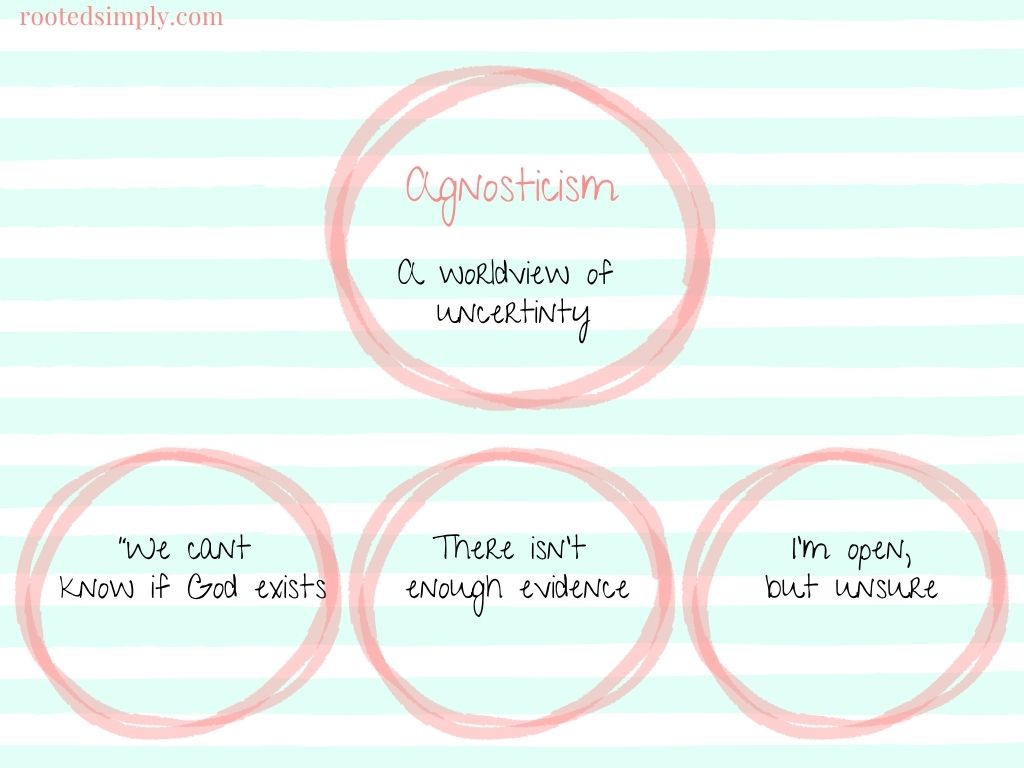
The Christian response to agnosticism takes its doubts seriously, respects its caution, and offers a path toward genuine knowledge of God rather than endless uncertainty. Agnosticism’s humility about what can be known is understandable—but Christianity shows that God has not remained hidden. He has made Himself knowable in ways that speak to both the mind and the heart.
Knowledge: Not Impossible, but Revealed
Agnosticism claims we cannot know whether God exists. Christianity responds by affirming that God has revealed Himself through creation, conscience, Scripture, and ultimately Jesus Christ. The Christian claim is not that humans discovered God, but that God lovingly made Himself known. This answers the agnostic longing for clarity without dismissing the reality of doubt.
Evidence: Not Ignored, but Examined
Agnosticism often avoids commitment because it sees evidence as inconclusive. Christianity invites honest seekers to examine the evidence—historical, philosophical, moral, and experiential. The resurrection of Jesus stands as a historical claim open to investigation, not a blind leap of faith. Christianity welcomes questions because truth can withstand scrutiny.
Relationship: Not Uncertain, but Personal
Agnosticism hesitates to make definitive claims about God. Christianity offers a relational God who pursues people personally. Faith is not merely intellectual assent; it is entering into relationship with a God who speaks, listens, and loves. This relational dimension answers the agnostic desire for authenticity and honesty.
Meaning: Not Undefined, but God-Given
Agnosticism leaves meaning open-ended—each person must decide for themselves. Christianity provides objective purpose: to know, love, and glorify God. This gives life direction, stability, and significance that subjective meaning cannot sustain.
Morality: Not Relative, but Rooted in God
Agnosticism often treats morality as a human construct. Christianity grounds morality in the character of God, explaining why humans universally recognize moral truths and feel moral responsibility. Without God, morality becomes preference; with God, morality becomes reality.
Destiny: Not Unknown, but Hopeful
Agnosticism leaves destiny uncertain. Christianity offers assurance of eternal life through Jesus’ resurrection. Hope is not speculation—it is anchored in history. Christianity replaces uncertainty with confidence rooted in God’s promises.
Invitation: Not Pressure, but Welcome
Agnosticism values humility and openness. Christianity honors that by offering an invitation, not coercion. Jesus consistently welcomed doubters, seekers, and skeptics. The Christian message is not “believe blindly,” but come and see.
1 thought on “Week 11 Everyone Has a Worldview—But Not Everyone Knows It Part 2”